Behind the scenes
How we made The Gift
The Gift is a four-minute office comedy made at our studio. Here is what went into it, from the first idea to the final sound, and how the same steps work when we make a film about your team.
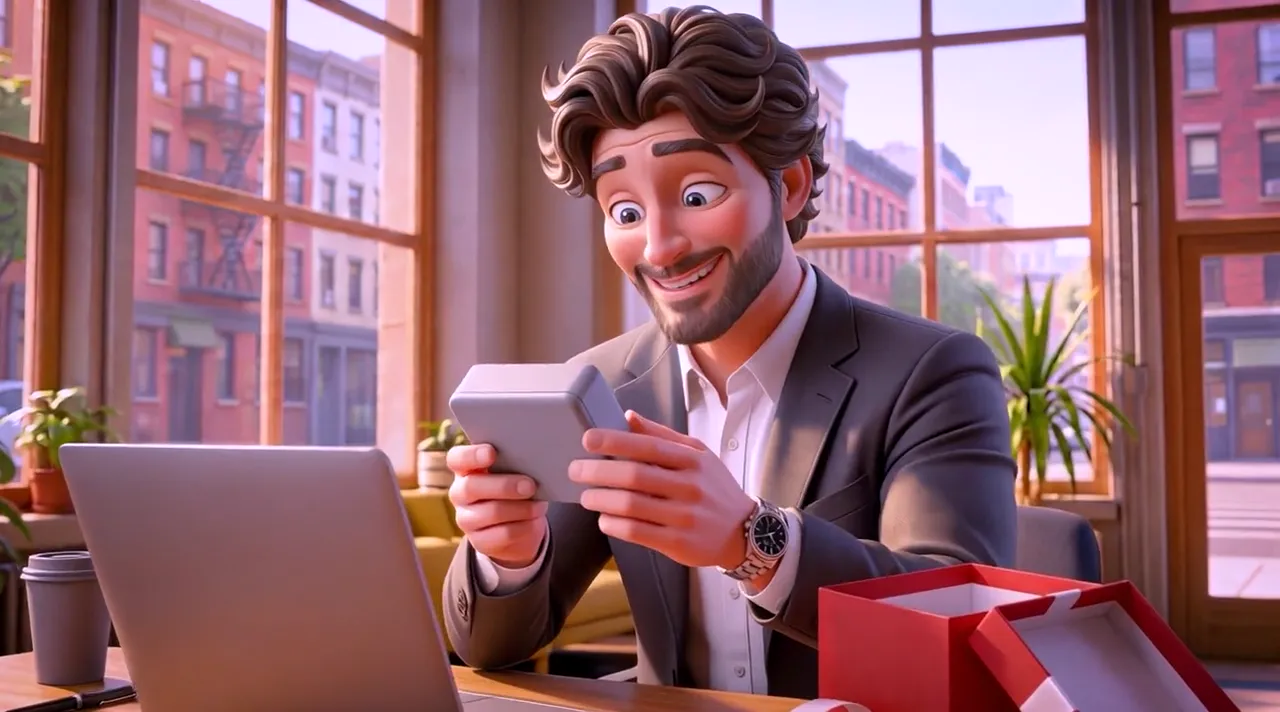
It starts with a story, not with pictures
Mr. Scope is a manager drowning in calls, emails and a fax that won't stop. His team gives him a box with a big red button. Pressing it doesn't make his day easier. It makes more of him. The joke is that even a room full of Mr. Scopes doesn't fix the real problem: he's still trying to do everything himself.
That is the whole spine of the film: a problem, a magic fix, things getting worse, the real answer. Every scene exists to move along that line.
When we make a film for you, this is the first thing we look for in your team's stories: the situation everyone recognises, and where it can go.
We build the world before anything moves
The office isn't a backdrop, it's the stage. If a desk moves between shots or a chair changes colour, viewers feel that something is off even when they can't say what. So before any animation we designed the main character and every place he appears in, and kept them fixed for the whole film.
In your project this is the character and style step: we draw the hero from photos, you choose the version you like, and from then on that is who appears in every scene.
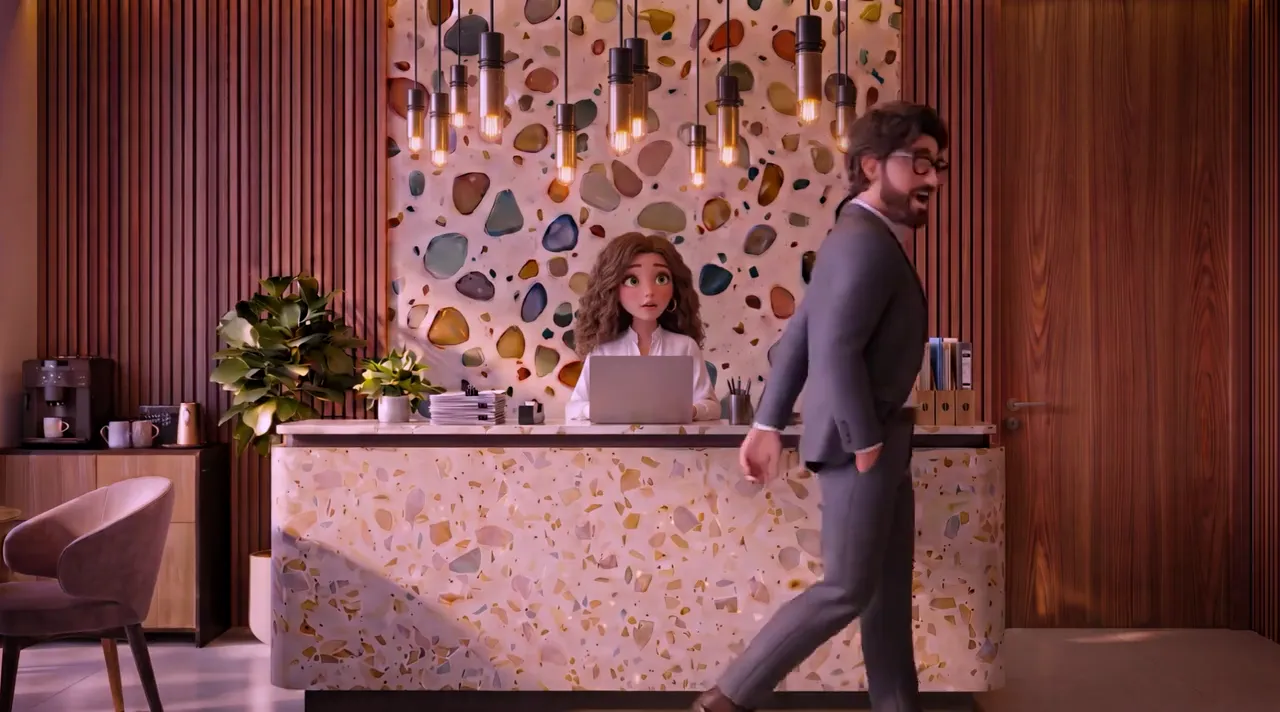
The storyboard is where the film gets directed
Before animating, we decide what each shot is for: a wide shot to show where everyone is, a close-up for a reaction, a pause held a beat longer because that's where the laugh is. It's tempting to make every shot spectacular. Usually the simpler shot tells the joke better.
You see the storyboard and can change it before animation starts, so nothing in the final cut comes as a surprise.
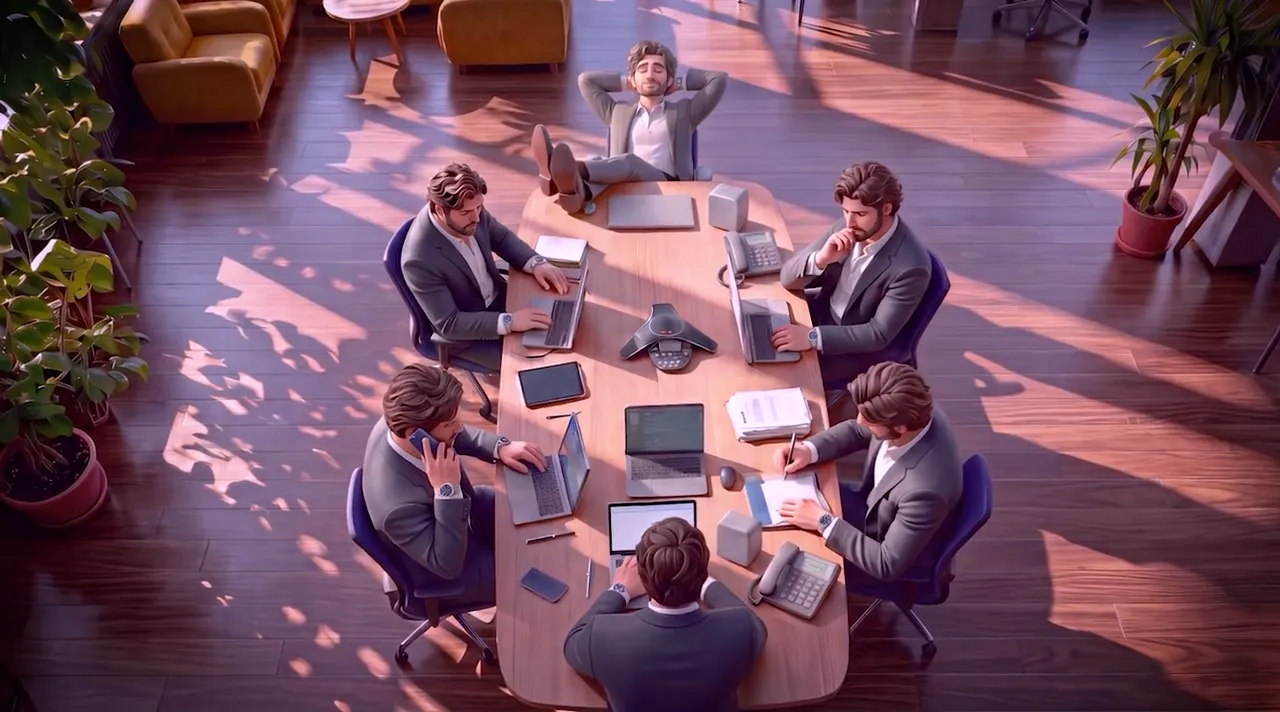
Many Mr. Scopes at one table
The hardest scene had several copies of the hero in one room. Each copy had to look exactly like him, each had to be doing something you can follow, and the scene had to get funnier, not just busier. Copies of a character aren't funny on their own. What they do is.
The edit makes the comedy
My background is editing and post-production, and the edit is where the film found its rhythm. A reaction that comes half a second early kills a joke. A shot held too long drains it. Often the fix wasn't a new shot but a different cut: a shorter reaction, a different order, a pause before the reveal.
Sound took a fifth of the time
An animated film without sound is a different film. Sound design took about 10 of the roughly 50 hours we spent on The Gift.
What it took, in numbers
- About 50 hours of work for a four-minute film.
- Around 400 still frames, more than 130 animated clips and over 100 sound pieces generated along the way.
- Only a small share of that made it into the final cut. Choosing what stays is our job.
AI draws the frames. The story, the staging, the timing and the sound are decided by people.
A film like this about your team
Your film goes through the same steps: a script from your colleagues' stories, characters drawn from photos, a storyboard you approve, then animation, voice, music and the edit. A one-minute film takes about a week, a 2–5 minute film about two weeks. The price is $350 per minute of finished film.
Planning it for the holiday party? Send a request by early December.